
I may earn money or products from the companies mentioned in this post. Please click my Disclosure Policy to learn more




Warm, flattering picks that won’t leave your space feeling cold or gloomy
If you’ve ever painted a room and thought, “Why does this look so… sad?” — there’s a good chance you’re dealing with a north-facing room.
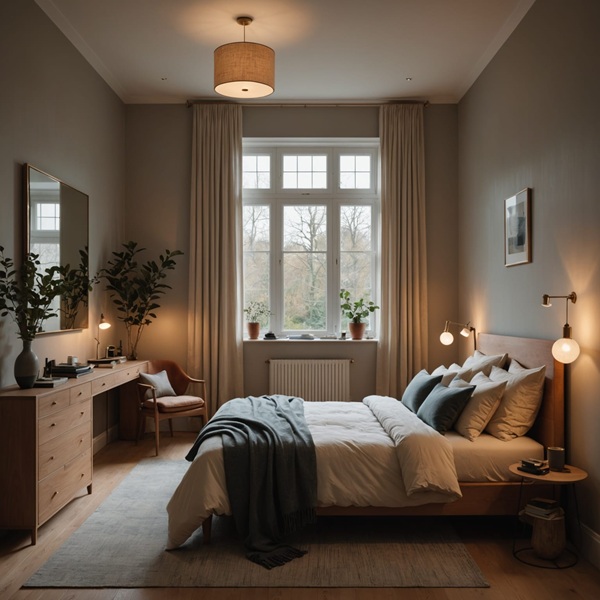
North-facing rooms get cooler, indirect light all day long. Translation? They tend to pull out gray, blue, or green undertones and mute warmth. Colors that look creamy and cozy in a sunny showroom can suddenly feel flat, chilly, or even a little green at home.
But don’t worry — this is fixable. With the right undertones, north-facing rooms can feel just as inviting as south-facing ones. Below are my tried-and-true paint colors from Benjamin Moore, Sherwin-Williams, and PPG that actually behave in cool light.
What Are the Best Paint Colors for a North-Facing Room?
The best paint colors for a north-facing room are warm neutrals, creamy whites, soft beiges, and light greiges with warm undertones. North-facing light is cool and indirect, which can make gray or blue-toned colors look flat or icy. Choosing paint colors with subtle warmth helps balance the light and keeps the room feeling inviting instead of cold.
In most north-facing rooms, the safest choices are:
- Warm whites (not stark or bright)
- Beige-leaning greiges
- Soft taupes with warmth
- Light neutrals with minimal gray undertones
If you’ve ever wondered why paint looks different depending on the direction your room faces, it all comes down to lighting and undertones.
Before you paint:
North-facing rooms exaggerate undertones. I always recommend testing at least two warm options on different walls before committing. Peel-and-stick paint samples make this easy (and save you from repainting twice).
What Works Best in a North-Facing Room (Quick Rule of Thumb)
Because north-facing rooms receive cool, indirect light all day, paint colors with warm undertones perform best and look more balanced on the walls.
Before we get into the colors, here’s the cheat sheet I give clients:
- ✔️ Warm neutrals > cool neutrals
- ✔️ Look for soft beige, greige, creamy off-white, or warm taupe
- ❌ Avoid icy grays, stark whites, and anything labeled “cool” or “silver”
- ✔️ A touch of warmth goes a long way — even if the color still reads neutral
Benjamin Moore: Warm & Reliable Classics
Benjamin Moore absolutely shines when it comes to north-facing rooms. Their warm neutrals tend to stay balanced instead of going muddy.
Top Picks:
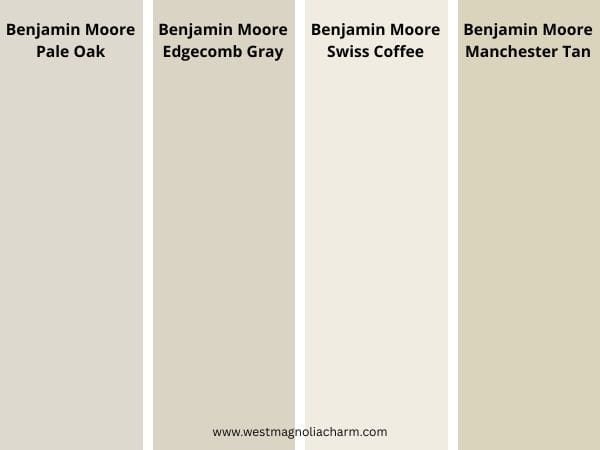
- Pale Oak (OC-20)
A soft, warm greige that stays light without turning cold. This is one of my go-to recommendations for open living spaces. - Edgecomb Gray (HC-173)
Light, warm, and flexible — especially beautiful in rooms that connect to hallways or kitchens.
If you’re torn between warm greige options, I break down how Edgecomb Gray compares to other popular neutrals in this post.
- Swiss Coffee (OC-45)
A creamy off-white with just enough warmth to avoid looking gray in low light. Great for trim and walls. - Manchester Tan (HC-81)
A true warm neutral that feels cozy and grounded without leaning yellow.
✨ Pro tip: Benjamin Moore’s warm neutrals tend to look best in eggshell or satin in north-facing rooms — flat can sometimes absorb too much light.
Want to see how these Benjamin Moore colors actually look in cool, north-facing light? Peel-and-stick samples let you test them on multiple walls before committing.
Sherwin-Williams: Soft Warmth That Feels Modern
Sherwin-Williams has some excellent north-facing-safe colors — you just have to skip their cooler grays.
Top Picks:
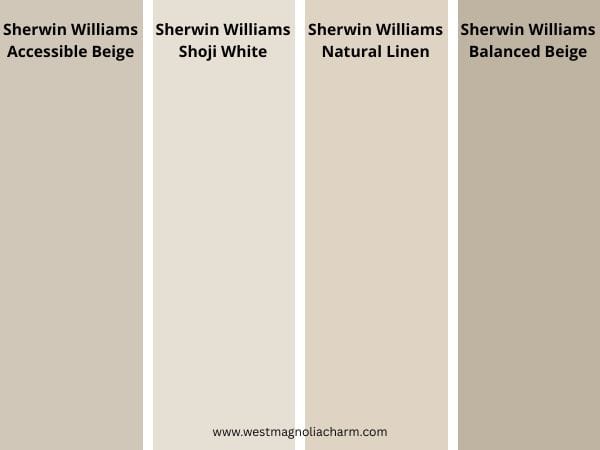
- Accessible Beige (SW 7036)
Don’t let the name fool you — this is more greige than beige and holds warmth beautifully in cool light. - Shoji White (SW 7042)
A creamy off-white that doesn’t feel heavy or yellow. One of my favorite alternatives to stark white.
Sherwin-Williams neutrals can shift quickly in cool light, which is why I always recommend comparing them side by side.
- Natural Linen (SW 9109)
Warm and soft with subtle depth — especially pretty in bedrooms and dining rooms. - Balanced Beige (SW 7037)
Richer and warmer than Accessible Beige, perfect if your room feels especially dim.
⚠️ Avoid in north-facing rooms: Passive Gray, On the Rocks, and other cool-toned grays — they almost always turn icy.
North-facing light can completely change Sherwin-Williams colors. I recommend sampling at least two options and checking them in the morning and at night before painting the whole room.
PPG Paints: Underrated Warm Neutrals
PPG is often overlooked, but they have some fantastic warm neutrals that thrive in challenging light.
Top Picks:
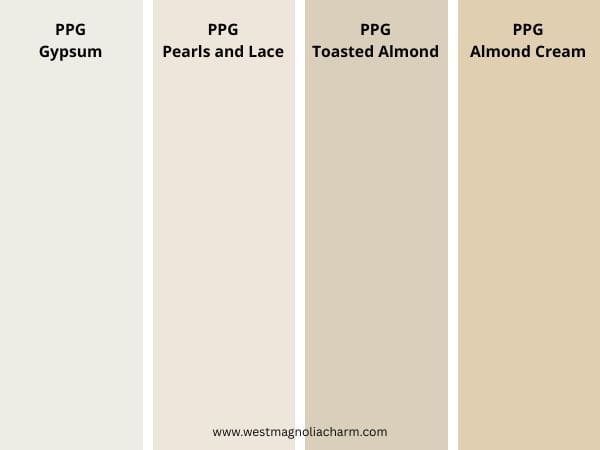
- Gypsum (PPG1006-1)
A soft, warm off-white that feels cozy instead of stark — great for smaller rooms. - Pearls And Lace (PPG1074-1)
Creamy without being heavy. This one keeps its warmth even on cloudy days. - Toasted Almond (PPG1095-3)
A warm beige with depth — ideal for living rooms or north-facing family spaces. - Almond Cream (PPG1086-3)
Light, inviting, and gentle. Works beautifully if you want warmth without committing to beige.
Colors to Be Careful With in North-Facing Rooms
Even popular colors can struggle here. I’d approach these with caution:
- Cool grays with blue undertones
- Stark whites with no warmth
- Pale silvers or “icy” tones
- Colors that rely on sunlight to shine (they won’t get it)
If you love a cooler color, balance it out with warm flooring, warm lighting (2700K–3000K bulbs), and warm textiles.
Before You Paint (Seriously — Don’t Skip This)
North-facing rooms are where samples matter most.
- Test at least two warm options
- Look at them morning, afternoon, and evening
- Don’t judge the color until the lights are on — that’s when undertones show their true personality
Sampling is especially important in rooms with challenging light, like basements, hallways, and north-facing spaces. Learning how to test paint samples correctly is a big piece of the puzzle.
👉 I always recommend peel-and-stick samples so you can move them around the room and see how the color shifts throughout the day.
Frequently Asked Questions
Is gray paint a bad choice for north-facing rooms?
Gray paint can work in a north-facing room, but cooler grays often look flat or blue. Warmer greiges with beige undertones tend to perform much better.
What is the best white paint for a north-facing room?
The best white paint colors for north-facing rooms are creamy whites with warmth, rather than bright or stark whites that can look gray in cool light.
Final Thought
North-facing rooms aren’t difficult — they’re just honest. They’ll show you exactly what’s in your paint color. Choose warmth, avoid icy undertones, and you’ll end up with a space that feels intentional, cozy, and beautifully balanced.
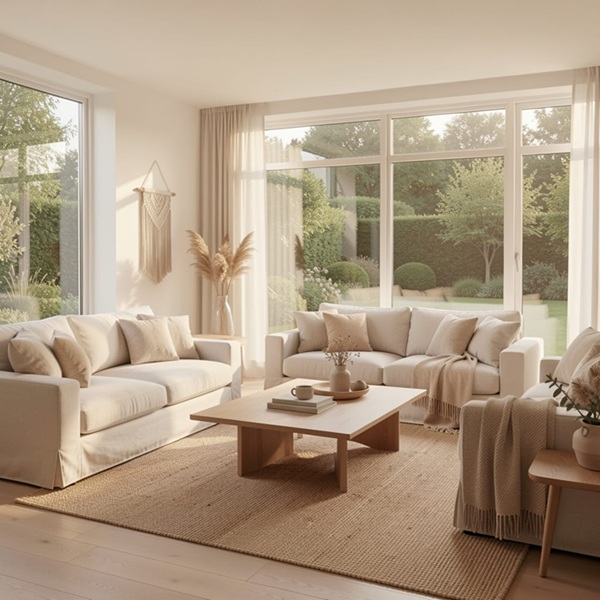
If your room still feels dim, choosing the right color is just one piece of the puzzle. I’m a big fan of these Paint colors that brighten a dark room.
If you want help narrowing down the perfect option for your space, that’s exactly what I do every day.
Still deciding? Testing samples in your own lighting is the only way to know for sure — especially in a north-facing room. Peel-and-stick samples let you see the color all day long without the mess.


I’m Cate. As a seasoned paint color consultant and former proprietor of the highly regarded painting company WOW 1 Day Painting in Bergen County, my journey in the world of design and home improvement has been a colorful one, quite literally. Nestled in the scenic landscapes of Northern New Jersey, I’ve cultivated a passion for transforming spaces through the power of paint, furniture restoration, and thoughtful home decor.