
I may earn money or products from the companies mentioned in this post. Please click my Disclosure Policy to learn more
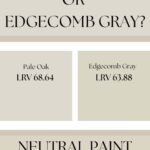
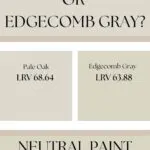

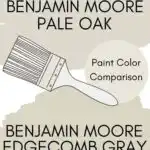
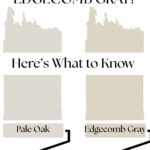
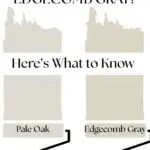
Benjamin Moore Pale Oak and Edgecomb Gray are both fantastic colors. If you’ve narrowed your paint search down to them, congratulations—you’ve officially entered the Warm Neutral Olympics. And trust me, it’s way more competitive than any sport I played growing up.
Both colors are gorgeous, versatile, homeowner-approved, designer-approved, dog-approved (Watson has standards), and yes—very easy to get wrong if you don’t understand their undertones. That’s where I come in.
In this head-to-head comparison, I’m breaking down undertones, LRV, lighting behavior, room-by-room performance, and real-life usage so you can confidently choose the winner for your home.
Let’s dive in before you repaint your walls for the 14th time this year. (No judgment. I’ve been there.)
Quick Summary: Pale Oak vs Edgecomb Gray

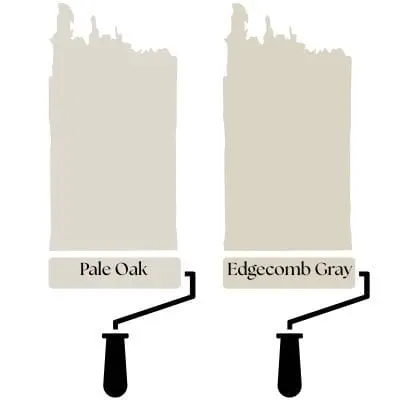
Benjamin Moore Pale Oak (OC-20)
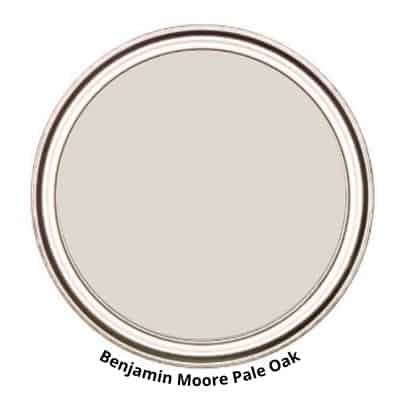

- LRV: 68.64
- Undertones: Warm gray with a soft taupe blush
- Vibe: Light, airy, elegant, soft
- Best For: Rooms that need warmth without heaviness
- Full Pale Oak Paint Review
Benjamin Moore Edgecomb Gray (HC-173)
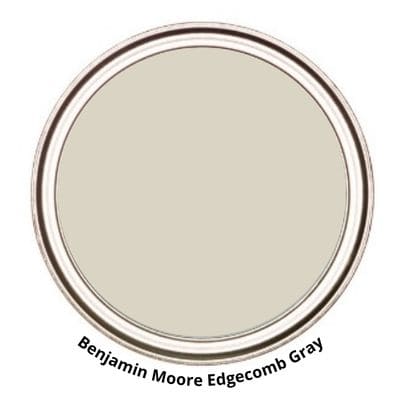

- LRV: 63.88
- Undertones: Warm greige leaning beige
- Vibe: Cozy, earthy, organic
- Best For: Homes that want a natural, grounded neutral
- Full Edgecomb Gray Paint Color Review
In plain English: Pale Oak is the lighter, fresher sister. Edgecomb Gray is the richer, earthier sister. Both beautiful. Both different. Choose carefully.
Test both colors the easy way! Order Samplize samples so you can see Pale Oak and Edgecomb Gray on your actual walls before committing.
Undertones: The Difference That Matters Most
Pale Oak Undertones


I describe Pale Oak as a warm gray with polite taupe undertones. It’s like gray invited taupe over for coffee, and now they’re best friends.
Depending on lighting, Pale Oak can look:
- Soft warm gray
- Taupe-leaning greige
- A whisper of pink (don’t panic—it’s subtle and typically only in low light)
- Super sophisticated in bright natural light
If your home has:
- Lots of natural light
- North-facing rooms
- Modern furnishings
You’ll love how Pale Oak stays calm and airy without going too beige.
Edgecomb Gray Undertones


Edgecomb Gray is pretty true to the definition of greige—not too gray, not too beige—and definitely warmer and more grounded than Pale Oak.
It leans:
- Soft beige in warm lighting
- Greige in neutral lighting
- Slightly muddy (in a good way!) in low-light spaces
- Cozy and earthy in any room
Think of Edgecomb Gray as the “I want a warm neutral, but I also want it to look designer” color.
If your home features:
- Woods, warm floors, or earthy decor
- Lower natural light
- A traditional or rustic style
Edgecomb Gray will look like it was made for your space.
Want to paint like a true professional?
Check out this must-have painting tool used by our painting crew
BUY THIS PAINTING TOOL
LRV Showdown: Which Color Is Lighter?

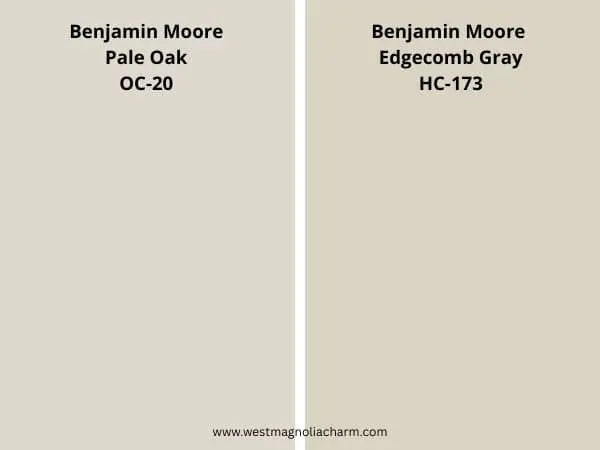
Quick refresher: LRV = Light Reflectance Value (how much light the paint color reflects).
- Pale Oak LRV: 68.64 → lighter, brighter, more reflective
- Edgecomb Gray LRV: 63.88 → slightly deeper, richer
What this means for your walls:
- If you want a color that keeps your home feeling a bit on the side of bright and open → Pale Oak wins
- If you want warmth and dimension without looking dark → Edgecomb Gray wins
Neither will feel heavy, but Pale Oak definitely brings more natural brightness.
See Pale Oak and Edgecomb Gray in your lighting before painting. Get the Samplize peel-and-stick samples—my favorite way to test colors.
How They Look in Different Lighting
North-Facing Rooms
- Pale Oak: Leans more taupe-gray, sometimes slightly pink. Still soft and pretty.
- Edgecomb Gray: Becomes more muted and reads like a gentle greige. More depth than Pale Oak.
South-Facing Rooms
- Pale Oak: Looks warm and creamy—but not yellow.
- Edgecomb Gray: Pulls warmer and more noticeably beige.
East-Facing Rooms
Morning light warms them both.
- Pale Oak: Warmer taupe-gray
- Edgecomb Gray: Cozy greige
Afternoon shadows will cool both down slightly.
West-Facing Rooms
Hello golden hour.
- Pale Oak: Soft, warm, dreamy
- Edgecomb Gray: Approaches full beige (in a pretty way)
Room-by-Room Breakdown
Living Room
- Pale Oak: Bright, elegant, works beautifully with modern style
- Edgecomb Gray: Warm, earthy, excellent with wood floors and traditional decor
Kitchen
- Pale Oak: Gorgeous with white cabinets and marble-look countertops
- Edgecomb Gray: A pro at complementing warm countertops and stained cabinets
Bedroom
- Pale Oak: Airy and calming
- Edgecomb Gray: Cozy and cocoon-like
Hallways
- Pale Oak: Helps narrow spaces feel bigger
- Edgecomb Gray: Adds warmth without going too dark
Bathrooms
- Pale Oak: Great if you want a spa-like, clean feel
- Edgecomb Gray: Works well unless your lighting is very cool
Pale Oak vs Edgecomb Gray: Which One Should You Choose?
Choose Pale Oak if you want:
- A lighter neutral
- A soft, airy feel
- A color that plays well with modern finishes
- A shade that minimizes yellow/orange wood tones
Choose Edgecomb Gray if you want:
- A warm greige that isn’t too light
- A grounded, earthy look
- A color that warms up dim spaces
- A shade that complements natural materials
If you still can’t decide:
Order Samplize peel-and-stick samples (my favorite mess-free option). Stick them up, move them around, stare at them like you’re in a staring contest—trust me, it works.
Pale Oak vs Edgecomb Gray: Quick Comparison
| Feature | Pale Oak (OC-20) | Edgecomb Gray (HC-173) |
|---|---|---|
| LRV | 69.89 (lighter) | 63 (deeper) |
| Undertones | Warm gray with taupe | Warm greige with beige |
| Overall Look | Soft, airy, elegant | Cozy, grounded, earthy |
| Best Lighting | Bright or neutral natural light | Lower light or warm light |
| Best For | Modern, airy spaces | Homes with warm floors, wood tones |
| Can Look Pink? | Yes, in cool/dim rooms | Rarely |
| Pairs Best With | Chantilly Lace, White Dove | White Dove, Cloud White |
| Room Match | Living rooms, kitchens, hallways | Bedrooms, living rooms, cozy spaces |
| Style Match | Modern, transitional | Farmhouse, traditional, rustic |
Still torn? Grab Samplize peel-and-stick samples for Pale Oak and Edgecomb Gray—they’re mess-free, accurate, and way cheaper than repainting twice.
Frequently Asked Questions
Is Pale Oak lighter than Edgecomb Gray?
Yes. Pale Oak has a higher LRV than Edgecomb Gray, making it the brighter and lighter option.
Does Pale Oak look pink?
Sometimes… slightly. Only in dim or cool lighting. It’s not Barbie pink—more like “I’m a taupe with a secret.”
Is Edgecomb Gray still popular in 2025?
Absolutely. It’s timeless, warm, flexible, and a favorite among designers and homeowners.
Which is more greige?
Edgecomb Gray leans more greige (and a touch more beige). Pale Oak is more of a soft, warm gray with taupe influence.
Can I use either color with white trim?
Yes! Try:
- Chantilly Lace for crisp contrast
- Simply White for a softer, warm pairing
Best white for Pale Oak?
Chantilly Lace or White Dove.
Best white for Edgecomb Gray?
White Dove or Cloud White.
Final Verdict
If you want light, fresh, and airy, go with Pale Oak.
If you want warm, cozy, and grounded, choose Edgecomb Gray.
Both are stunning neutrals—and both are easy wins when used in the right space. Just remember: lighting is the real boss here. You’re just the homeowner trying to impress it.
And as always, grab a Samplize sample (or two). Your walls will thank you, your decision-making anxiety will calm down, and you won’t end up repainting at 11 p.m. because “it looked different in the store.”
Check out the latest paint color comparison Alabaster vs City Loft – Shewin Williams Finest
CONSTANTLY FORGETTING WHAT PAINT COLORS YOU USED IN YOUR HOME? KEEP TRACK OF THEM ALL WITH THIS HANDY PAINT COLOR KEEPER


I’m Cate. As a seasoned paint color consultant and former proprietor of the highly regarded painting company WOW 1 Day Painting in Bergen County, my journey in the world of design and home improvement has been a colorful one, quite literally. Nestled in the scenic landscapes of Northern New Jersey, I’ve cultivated a passion for transforming spaces through the power of paint, furniture restoration, and thoughtful home decor.